
How to Spot a True Digital Marketing Expert Before You Hire
Many businesses hire someone who can schedule posts, boost ads and pull reports. This guide shows how to separate task executors from real digital marketing experts who build growth systems.
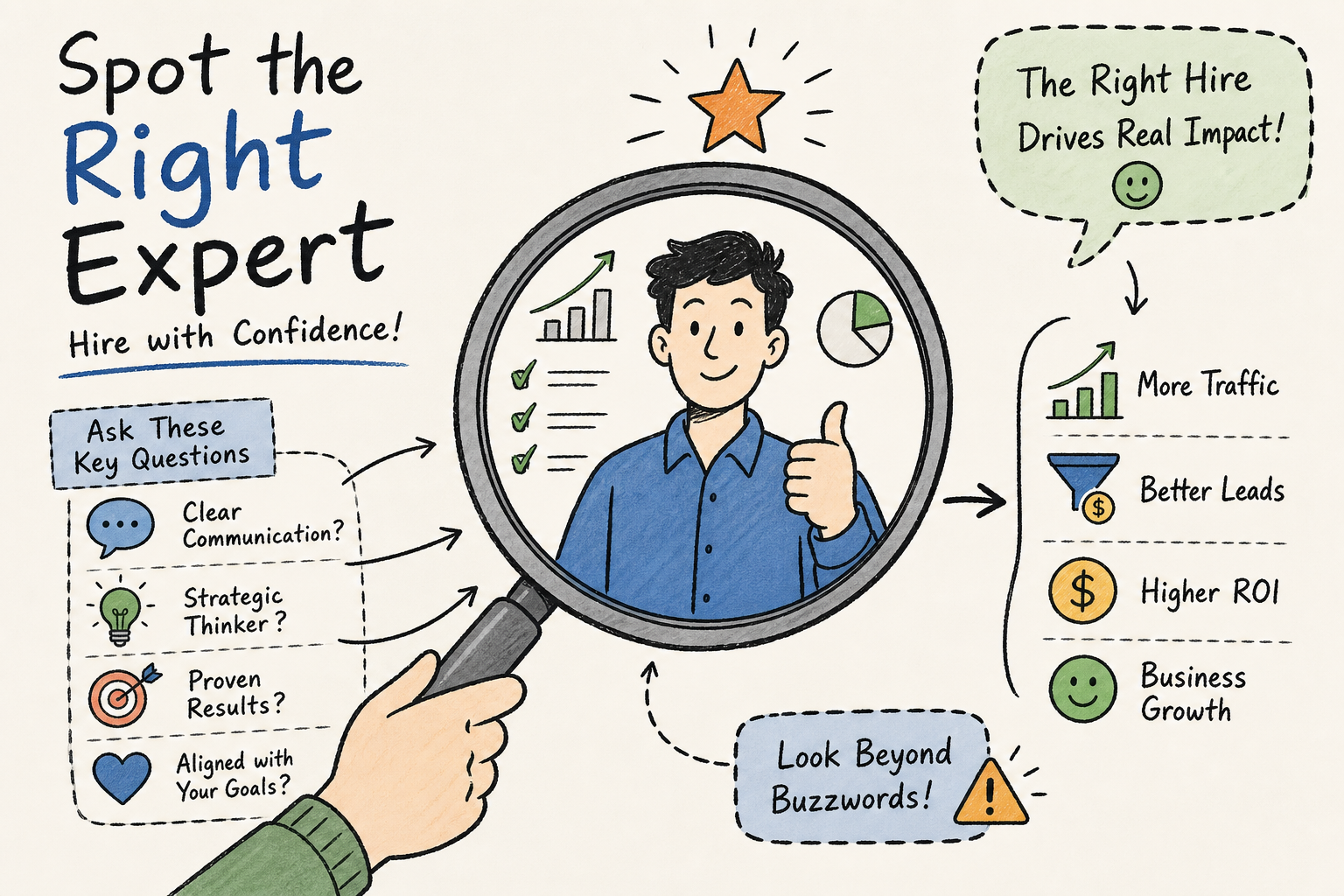
A true expert builds a growth system, not just campaign activity.
A generalist can post content, boost ads and generate reports. A true digital marketing expert diagnoses the business problem, designs the funnel, sets KPIs, connects marketing with sales and improves revenue efficiency over time.
The real gap between a generalist marketer and a digital marketing expert
What a generalist marketer typically delivers
Generalists are useful. They can post across channels, draft content, run basic ads and keep social accounts tidy. The limitation is depth. Generalists often optimize for activity, not outcomes.
What a true digital marketing expert brings
A real expert thinks in systems. They design audience segments, architect conversion funnels, select attribution models and allocate budget by expected ROI across channels.
Revenue thinking
They connect campaigns with CAC, ROAS, pipeline value and payback windows.
Documented process
They use audits, roadmaps, hypotheses, tests and reporting cadence.
Budget discipline
They diagnose underperformance before asking you to increase spend.
Why the difference shows up in results
On paper, you might pay similar rates for a generalist and an expert. The difference appears after three to six months, when one business has a functioning growth system and another has a sleek dashboard with flat revenue.
The certifications and qualifications that actually signal competence
Certifications are not magic, but they help filter for current knowledge and baseline skill. The highest signal is certification paired with measurable results.
The combination that earns trust
Ask for the numbers behind the story. You want before-and-after metrics, the decisions in between and how learning transferred to the next campaign.
How to read a portfolio like a strategist would
What real performance evidence looks like
Strong portfolios read like mini case files. They define objectives, audience, channels, assets, the candidate’s role and the numbers that mattered.
Tool fluency and analytical thinking
Look for evidence inside Google Ads, GA4, Meta Ads Manager, HubSpot or Semrush. Strong candidates show how they used data to decide, not just that they collected it.
What to skip past
Client logos, testimonials without context and big budget claims are decorative, not diagnostic. Focus on ownership, decisions and outcomes.
Interview questions that separate pretenders from real experts
Questions that test SEO and technical depth
- Walk me through how you would audit a page with declining organic traffic.
- How do you decide whether to refresh content, consolidate pages or create something new?
- Which data sources would you check first: Search Console, GA4, crawler data or SERP changes?
Questions that reveal paid media thinking
- What would you look at first if CPC is rising but conversions are flat?
- How do you design and evaluate an ad test?
- What are your stop, scale and learning rules for campaign experiments?
Questions that expose social media strategy
- How do you decide what content belongs on each platform?
- If engagement is high but leads are low, what changes?
- How do you connect attention to landing pages, offers and retargeting paths?
Red flags that tell you to walk away before you sign
They report on activity instead of outcomes
Vanity metrics get loud when results are thin. If conversations revolve around impressions, reach, likes or followers, expect more of the same after signing.
Their strategy is vague and process is undocumented
Be careful with proposals that jump into tactics without an audit, onboarding plan, tracking process or approval flow.
Communication patterns that signal risk
- The senior strategist disappears after kickoff
- Updates are late or irregular
- They keep asking for more time without a revised plan
- They resist transparency or reporting detail
- They cannot define responsibility, timeline and decision rights
What a legitimate engagement includes: KPIs, deliverables and pricing
Deliverables and KPIs in months one through six
The first quarter sets the foundation. A healthy engagement usually starts with technical and content audits, ICPs, personas, channel strategy, tracking setup and a 90-day roadmap.
Months four to six should move into content, campaign launches, landing page iterations, creative refreshes and CRO testing, with KPIs linked to qualified traffic, MQLs, SQLs, CAC, ROAS and pipeline value.
What working with a certified ROI-focused team looks like
With AdSpace Consult, strategy is built on data from day one. KPIs are aligned before campaigns launch, GA4 and CRM attribution are checked, and every channel decision is connected to measurable business outcomes.
Hire the strategist who thinks in outcomes
The difference between a generalist and a true digital marketing expert rarely shows in a CV or glossy pitch deck. It shows in the questions they ask, the process they document, the metrics they report and the results they can prove.
Hiring is not about filling a marketing seat. It is about selecting a strategist who builds systems that compound.
Frequently asked questions
Look for documented process, strategic thinking, measurable case studies, strong reporting, technical knowledge and clear links between marketing activity and revenue outcomes.
No. Certifications are helpful, but they must be supported by evidence such as case studies, before-and-after metrics, campaign decisions and business outcomes.
Ask how they audit declining traffic, diagnose rising CPC, design ad tests, connect social engagement to leads and report on CAC, ROAS, SQLs and pipeline value.
The biggest red flag is vague strategy with no audit, no clear KPIs, no reporting structure and a focus on activity metrics instead of business outcomes.
Need a certified digital marketing expert who builds for ROI?
Start with a conversation before you commit to the wrong hire. AdSpace Consult can review your goals, marketing setup and growth opportunities, then show what a real growth system looks like for your business.